August 7, 2026 · Condominium & HOA Law
Disclaimer: The information provided in this article is for general informational purposes only and does not constitute legal advice. Reading this article does not create an attorney-client relationship between you and Ward & Rafter, LLP. Every legal matter is unique, and the information above may not apply to your specific situation. You should not act or refrain from acting based on any information on this website without first consulting a licensed attorney. If you have a legal question, please contact us to discuss your matter.
Boards negotiate payment plans with delinquent owners all the time. It is often the fastest way to resolve an unpaid balance without more litigation. A recent decision from the Appellate Division, First Department, shows how a payment plan that skips a few sentences can end up costing the association more than the homeowner.
What Happened in the Case
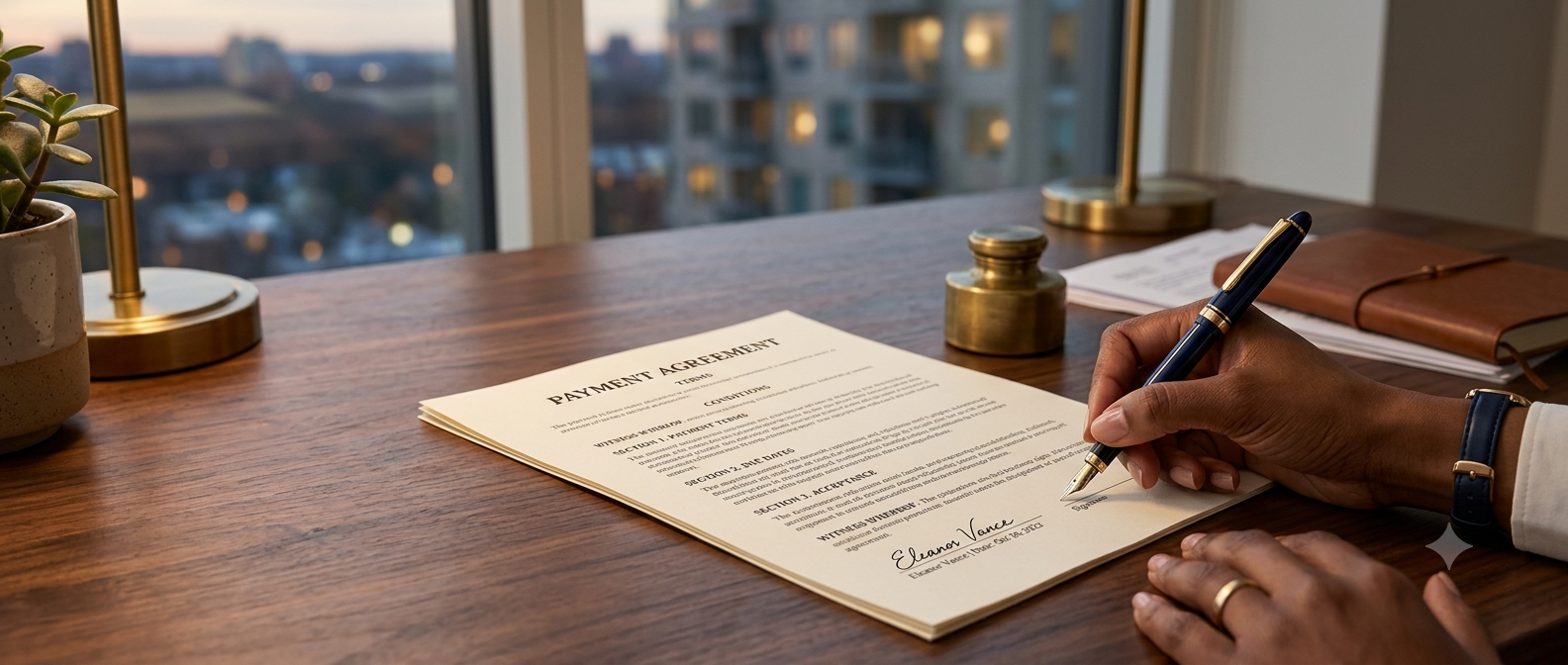
In Shorehaven Homeowners Association, Inc. v. Campbell, decided April 14, 2026, a Bronx HOA had already obtained a foreclosure judgment against a homeowner who owed more than $40,000 in unpaid common charges, interest, and assessments. After the homeowner made two payments that brought the balance down to roughly $21,455, the parties signed a settlement agreement in March 2025. The homeowner agreed to pay off the balance in 24 monthly installments of $893.
The agreement covered the payment schedule and nothing else. It did not incorporate the HOA's bylaws, which generally require a member to cover the association's attorney's fees and collection costs. It also did not include its own clause addressing what would happen if the homeowner defaulted.
Why the Missing Clause Mattered
The homeowner missed her first payment deadline in April 2025. Instead of falling further behind, she paid off the entire remaining balance over the following six weeks, nearly two years ahead of schedule. The HOA then tried to add close to $4,000 in legal and publication fees to the amount she owed.
The appellate court sided with the homeowner. Because the settlement agreement never referenced the bylaws or included its own fee provision, the HOA had no contractual basis to add those charges after the fact. General authority found in the governing documents does not carry over automatically once a board signs a separate written agreement that leaves those terms out.
What the Ruling Doesn't Decide
The court's holding is narrow. It addressed whether fees could be added under that specific settlement agreement. It did not address other ways a board might try to recover enforcement costs.
One open question is whether a board can rely on the bylaws' general fee-shifting authority as a separate basis for those costs, apart from the settlement agreement itself. Bylaws typically bind owners as members regardless of any individual settlement agreement, so this would be a different legal theory than the one the court rejected: instead of reading the fee obligation into the agreement, the board would post the enforcement costs to the owner's ledger under the bylaws directly and pursue a separate collection action if unpaid. The court did not evaluate this approach because that fact pattern was not before it.
A related question is how the analysis applies to a genuinely new default. The ruling concerned fees generated while enforcing the specific agreement that was later paid off. It did not address a situation where a homeowner satisfies one settlement agreement in full and, at some later point, falls into a separate and unrelated delinquency. Whether fee-shifting authority under the bylaws applies more directly in that scenario is a distinct question the case does not reach.
A Second Lesson: Full Payment Can End a Foreclosure
The court also confirmed a principle that reaches beyond this one dispute. Under the equity of redemption, a homeowner facing foreclosure can redeem the property by tendering the full amount owed at any point before an actual foreclosure sale. Once the HOA accepted full payment without objection, it waived its right to move forward with the sale, even though the payment came after a missed installment.
What This Means for Board-Drafted Payment Agreements
Payment plans remain a practical tool for resolving delinquent accounts, but this case shows how a plan can leave money on the table if it is not drafted carefully. A separate settlement or payment agreement generally controls the relationship between the parties going forward. Terms that exist only in the declaration or bylaws are not automatically read into it.
Boards working with counsel on a payment agreement should confirm the document either incorporates the governing documents by reference or spells out its own terms for default, including whether legal fees, publication costs, or other collection expenses can be added to the balance.
The Takeaway for Boards
The underlying lesson applies broadly to condo, co-op, and HOA governance alike. A board's authority under its bylaws is only as strong as what actually appears in the document a homeowner signs. When a payment agreement stays silent on fees and defaults, courts will hold the association to what the agreement says, not to what the board assumed the bylaws already covered.
Readers with questions about drafting or enforcing a payment agreement with a homeowner or unit owner should consult a qualified attorney. Contact Ward & Rafter, LLP to discuss your situation.