June 19, 2026 · Environmental Law
Disclaimer: The information provided in this article is for general informational purposes only and does not constitute legal advice. Reading this article does not create an attorney-client relationship between you and Ward & Rafter, LLP. Every legal matter is unique, and the information above may not apply to your specific situation. You should not act or refrain from acting based on any information on this website without first consulting a licensed attorney. If you have a legal question, please contact us to discuss your matter.
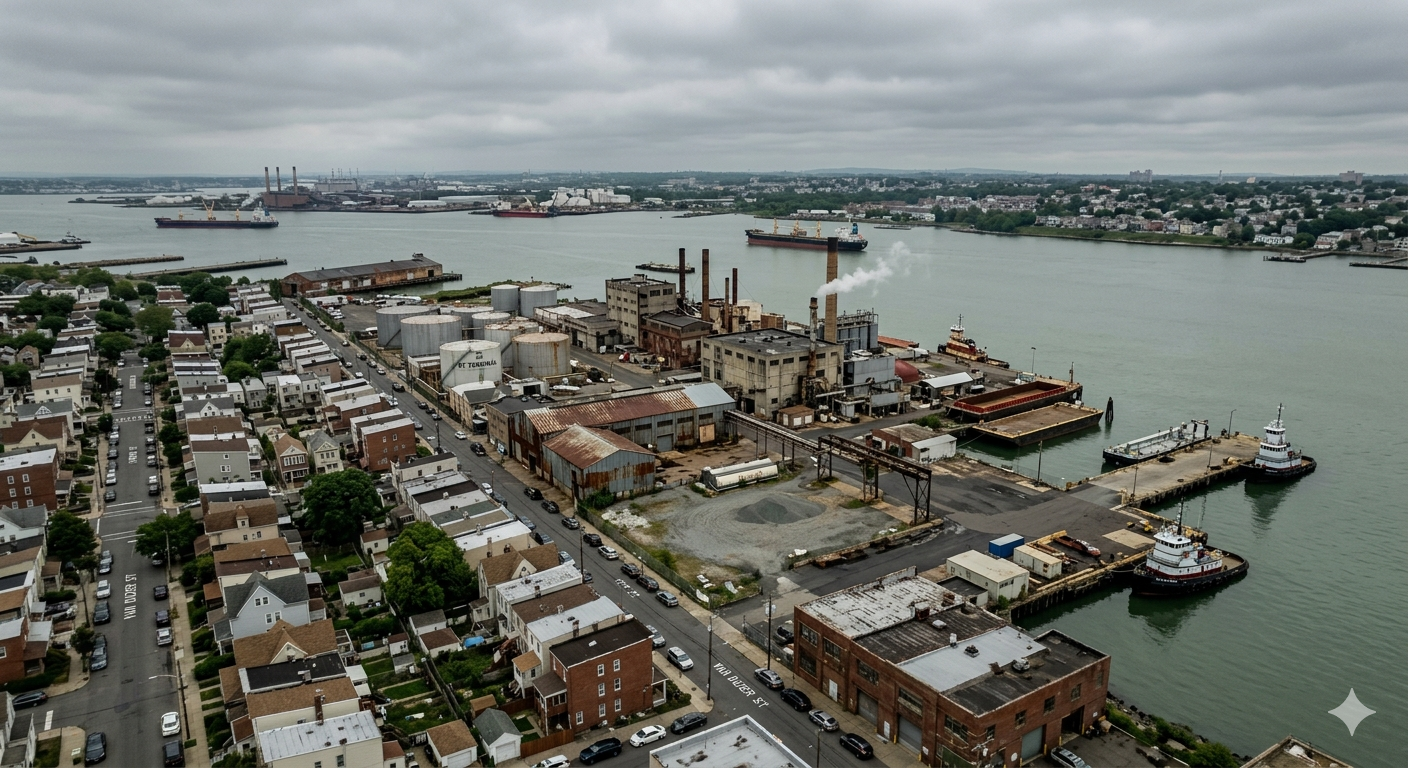
The North Shore of Staten Island covers roughly five square miles. Within that area, the EPA and local residents have identified 21 contaminated sites, every one of them sitting within 70 feet of homes and apartment buildings. The North Shore also has the borough's lowest household income, and nearly half of its households are Black or Latino. That combination of concentrated industrial contamination in a low-income minority community is not a coincidence. It is a pattern that has been documented for decades. What has been less discussed is what residents can actually do about it in court.
What the Contamination Looks Like
The North Shore's industrial history runs deep. Former facilities along the waterfront produced lead products, linseed oil, railway freight cars, and chemicals that have leached into soil and groundwater for generations. Uranium ore was once stored at a Port Richmond site that was not eligible for federal attention until 2009. The American Lung Association reports that Staten Island has the worst smog of any of the five boroughs. New York State health data shows the lung cancer death rate on Staten Island is 48% higher than the rest of New York City. Residents have reported elevated rates of asthma and rare cancers they believe are tied to their environment.
These are not just public health statistics. They are the factual foundation of civil lawsuits.
Toxic Tort Claims: Suing the Polluter Directly
When a property owner or industrial operator releases contaminants that harm nearby residents, those residents may have civil claims against the responsible party. These are called toxic tort claims.
A toxic tort claim requires showing that a specific defendant released a hazardous substance, that the plaintiff was exposed to it, and that the exposure caused a specific harm. Medical records, environmental testing data, expert testimony, and records of the defendant's operations all become critical evidence. These cases are factually complex, but New York courts have allowed them to proceed when plaintiffs can establish the link between contamination and injury.
For North Shore residents, the central question is often which company or property owner is responsible for the site closest to their home and whether that entity can still be held accountable. Some former operators have dissolved or transferred assets, which requires additional legal analysis to identify viable defendants.
Property Damage Claims
Contamination does not only affect health. It affects property values. Residents near documented toxic sites often find their homes worth significantly less than comparable properties in unaffected areas. They may be unable to sell without disclosing known contamination. Contaminants that migrate onto private land can require remediation at the owner's own expense.
New York law allows property owners to seek damages for diminished property value caused by nearby contamination, the cost of remediating their own land, and loss of use and enjoyment of their property caused by ongoing pollution. These claims can be brought as private nuisance actions or negligence claims depending on the facts.
Private Nuisance and Ongoing Harm
When contamination is ongoing rather than historical, private nuisance claims become especially relevant. A private nuisance claim does not require proof of intent. It requires showing that a defendant's use of their property unreasonably interferes with the plaintiff's use and enjoyment of theirs. For residents dealing with persistent odors, airborne particulates, or contamination that continues to migrate, a nuisance claim can support an injunction requiring the polluter to stop the activity in addition to monetary damages.
New York's Environmental Justice Law
New York's Environmental Justice Siting Law took effect June 12, 2026. It requires state agencies to evaluate the pollution burden on overburdened communities before approving new facilities or permits. The North Shore qualifies as a disadvantaged community under the state's criteria. Any new facility proposed for the area now faces a higher regulatory bar.
The law does not create retroactive civil claims for past harm. But for residents facing new proposed industrial uses in their neighborhood, it creates a meaningful tool to challenge approvals that would add to an already burdened community.
Timing Matters
Toxic tort and property damage claims in New York are subject to statutes of limitations that vary depending on the type of claim and when the plaintiff first knew about the harm. The discovery rule can extend the filing window for residents who only recently connected their health conditions to environmental exposure. Delay can complicate cases, particularly when defendants argue the claim was filed too late or when evidence degrades over time.
Residents who believe their health or property has been affected by nearby contamination should consult a qualified attorney as soon as possible. Contact Ward & Rafter, LLP to discuss your situation.