June 11, 2026 · Landlord-Tenant Law
Disclaimer: The information provided in this article is for general informational purposes only and does not constitute legal advice. Reading this article does not create an attorney-client relationship between you and Ward & Rafter, LLP. Every legal matter is unique, and the information above may not apply to your specific situation. You should not act or refrain from acting based on any information on this website without first consulting a licensed attorney. If you have a legal question, please contact us to discuss your matter.
New York City has a long history of layering compliance obligations onto landlords without much fanfare, and Local Law 86, known as the Rent Transparency Act, follows that tradition. It took effect on January 26, 2026, it applies to a significant portion of the city's rental housing stock, and it requires something specific and visible: a posted notice in your building's common area informing tenants that rent-stabilized units exist in the building and explaining how to find out whether their unit is one of them. The notice has to be in English and Spanish. And it has to be there now.
What the Law Requires
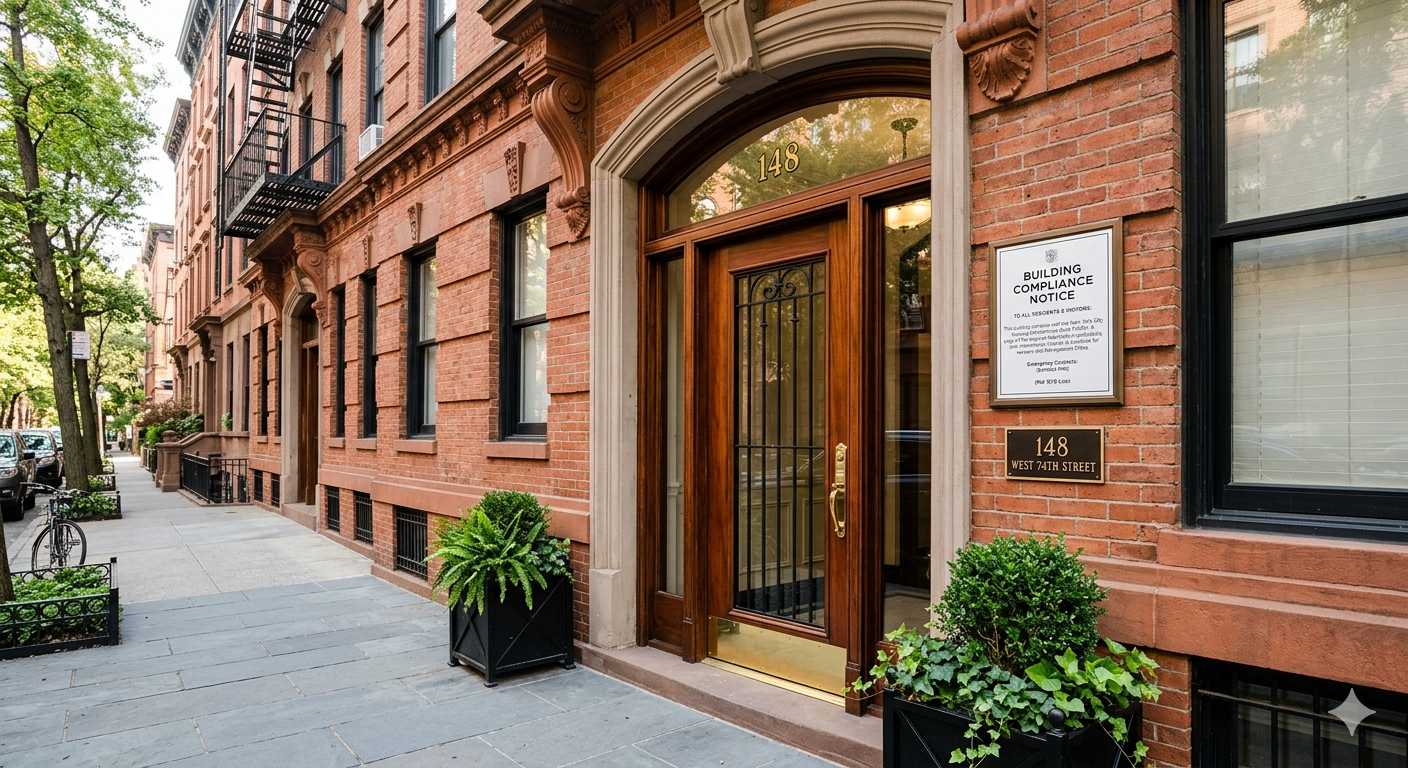
Local Law 86 applies to any multiple dwelling in New York City that contains at least one rent-stabilized unit. If that describes your building, you are required to post a bilingual notice in a publicly visible common area, a lobby, a mailroom, a hallway near the entrance, somewhere tenants and visitors can actually see it.
The notice must include the building's address and its HPD property registration number. It must state that the building contains one or more units subject to the Rent Stabilization Law of 1969. And it must explain how tenants can contact New York State Homes and Community Renewal to find out whether their specific unit is stabilized. HPD has issued the required language. It is not something landlords write themselves. It is a standardized notice, and using the correct version matters.
This is not a suggestion. It is an affirmative obligation, and HPD is the agency responsible for enforcement.
Why the City Passed This Law
The Rent Transparency Act was sponsored by Council Member Sandy Nurse and signed into law in 2025. The driving concern was simple: a significant number of tenants living in rent-stabilized apartments have no idea they are stabilized. That lack of awareness makes it easier for overcharges to go unchallenged. By requiring a visible, bilingual notice in every covered building, the city is putting the obligation on landlords to make that information available.
That background matters because it tells you something about how HPD is likely to approach enforcement. This law is part of a broader effort by city and state agencies to strengthen oversight of rent stabilization and close the information gap between landlords and tenants. A missing or incorrect notice is not going to be treated as an oversight. It is going to be treated as a violation.
Who Is Covered
The law applies to multiple dwellings, meaning residential buildings with three or more units, that contain at least one rent-stabilized apartment. If you are not certain whether any of your units carry stabilized status, the DHCR registration database at hcr.ny.gov is the place to start. Landlords are already required under existing law to register stabilized units with DHCR annually. Local Law 86 adds a public-facing, common-area posting obligation on top of that existing framework.
Buildings with no stabilized units at all are not covered. But rent stabilization applies broadly to buildings with six or more units constructed before 1974, as well as many newer buildings that received certain tax incentives, so a large number of New York City landlords are within this law's reach.
The Practical Stakes
Landlords sometimes treat posting and notice requirements as lower priority compared to the more immediate pressures of rent collection, maintenance, and Housing Court. That is a mistake. An HPD violation for a missing notice is a real violation. It goes on the building's record. And for landlords who find themselves in Housing Court on an unrelated matter, a history of HPD violations has a way of complicating proceedings that might otherwise move quickly.
Walk your building. Confirm the notice is posted in the right location, that it is legible, that it is in both languages, and that it includes the correct address and HPD registration number. If it is not there, get it up. The fix is simple. The cost of ignoring it is not.
Landlords with questions about Local Law 86, rent stabilization compliance, or any other landlord-tenant matter should consult a qualified attorney familiar with New York housing law. Contact Ward & Rafter, LLP to discuss your situation.